
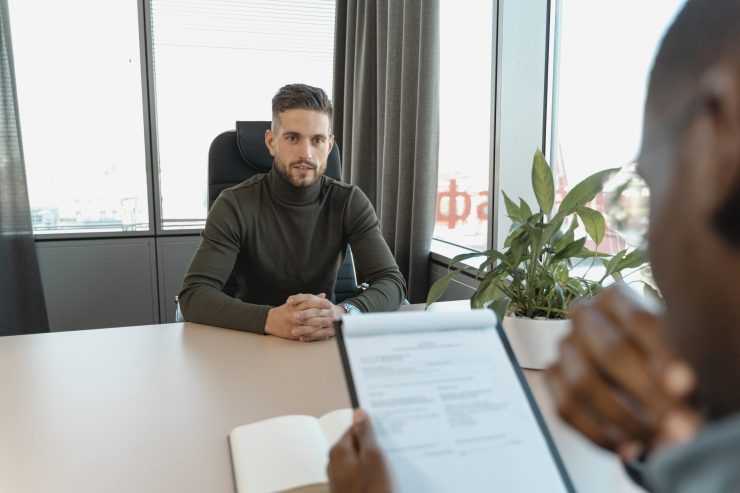
The best project coordinator interview questions test three things: follow-through, organization, and clear communication. This guide gives you 20 questions in four groups, what a strong answer sounds like, the red flags to watch for, and a scoring rubric you can use today.
| Question group | What it tests | Questions |
|---|---|---|
| Behavioral | Past follow-through and organization | 1 to 6 |
| Situational | Judgment under pressure | 7 to 11 |
| Tools and process | Hands-on project skills | 12 to 16 |
| Communication and fit | Writing, reporting and working style | 17 to 20 |
Short on time to interview? Exec Assistants screens, tests, and interviews remote project coordinators for you. You meet a vetted shortlist in 7 to 10 days.
Why Structured Interview Questions Work Best
A structured interview asks every candidate the same questions in the same order and scores each answer against the same scale. Research backs this method.
In 2022, Paul Sackett and colleagues re-examined decades of hiring research in the Journal of Applied Psychology. They found that structured interviews were the strongest single predictor of job performance among common hiring methods, with a corrected validity of .42. Their estimate for cognitive ability tests fell to .31, and work samples fell to .33.
Structure also cuts bias. Edward Thorndike described the halo effect in 1920: one strong trait colors the whole impression. A candidate who speaks with confidence can seem organized even when their answers show gaps. A fixed scoring rubric keeps the focus on evidence.
Speed matters too. SHRM’s 2025 Recruiting Benchmarking data shows the average time to fill a role sits at about a month and a half. A clear question set shortens that cycle.
Behavioral vs Situational Questions
The two main types of structured questions test different things.
- Behavioral questions ask about past actions. Tom Janz introduced the behavior description interview in 1982. Its core idea: past behavior predicts future behavior.
- Situational questions ask what the candidate would do in a future scenario. Gary Latham and colleagues developed the situational interview in 1980. It tests judgment and reasoning.
Use both. Behavioral questions show what a coordinator has done. Situational questions show how they think.
The STAR Method
Strong candidates answer behavioral questions with the STAR method: situation, task, action and result. Listen for all four parts. A missing “result” often means the project slipped or the candidate played a small role.
Behavioral Project Coordinator Interview Questions
These six questions test real past performance. Ask for a specific project each time.
1. Tell me about a project you kept on schedule when it started to slip.
What to listen for: A clear early warning sign, a specific action such as re-sequencing tasks or escalating a blocker, and a measurable result.
Red flag: The candidate describes the slip but credits someone else with the fix.
2. Describe the largest number of projects you tracked at once. How did you stay organized?
What to listen for: A number, a named tool such as Asana or Smartsheet, and a system such as a master dashboard or a weekly review.
Red flag: “I just remember everything.” Memory fails at scale.
3. Tell me about a time a task owner kept missing deadlines. What did you do?
What to listen for: Polite, direct follow-up, a check on the cause, and escalation to the project manager when reminders failed.
Red flag: The candidate did the task themselves without telling anyone.
4. Walk me through a status report you wrote. Who read it and what decision did it drive?
What to listen for: A clear format, such as red, amber and green (RAG) ratings, a named audience and a decision the report prompted.
Red flag: The report listed activity with no status or next step.
5. Tell me about a mistake you made on a project and how you fixed it.
What to listen for: Ownership, a fast fix and a process change to prevent a repeat.
Red flag: No mistake comes to mind, or the blame lands on others.
6. Describe a time you managed a vendor or contractor deadline.
What to listen for: Tracked deliverables, early reminders and a record of what the vendor promised.
Red flag: The candidate only noticed the delay after the deadline passed.
Situational Project Coordinator Interview Questions
These five questions test judgment. Several answers can work, so score the reasoning behind each one.
7. Two senior stakeholders give you conflicting priorities on the same day. What do you do?
What to listen for: The candidate documents both requests and takes the conflict to the project manager for a decision.
Red flag: The candidate picks a side alone.
8. A critical task on the critical path will finish three days late. What steps do you take in the first hour?
What to listen for: Confirm the new date, check which tasks depend on it, update the timeline and alert the project manager with options. The critical path is the longest chain of dependent tasks, so any delay on it moves the end date.
Red flag: The candidate waits for the weekly meeting to raise it.
9. A client asks you directly to add a feature. What do you say?
What to listen for: The candidate logs it as a change request and routes it to the project manager for approval.
Red flag: The candidate agrees on the spot. That creates scope creep, the slow growth of a project beyond its approved scope.
10. You join a project halfway through with no documentation. How do you get up to speed in your first week?
What to listen for: Review the project board, meet each workstream lead, rebuild the RAID log and confirm the next milestones.
Red flag: No plan beyond “ask around.”
11. Your project manager is on vacation and a vendor misses a key delivery. What do you do?
What to listen for: Contact the vendor, get a new date in writing, assess the impact and inform the backup decision-maker.
Red flag: The candidate does nothing until the manager returns.
Tools and Process Interview Questions for Project Coordinators
These five questions test hands-on skill. Ask the candidate to share a screen when possible.
12. Which project management tools have you used, and how did you set up a new project in one?
What to listen for: Named tools such as Asana, Jira, Monday.com, ClickUp or Smartsheet, plus steps such as templates, sections, owners and due dates. Our guide to project management tools lists the main options.
Red flag: Only a general claim such as “I’m good with software.”
13. How do you build a work breakdown structure for a new project?
What to listen for: Start with the final deliverable, break it into smaller work packages, then assign owners and estimates. See how a work breakdown structure works.
Red flag: The candidate jumps straight to dates without breaking down the work.
14. What goes into a RAID log, and how often do you update it?
What to listen for: Risks, assumptions, issues and dependencies, with a weekly review and an owner for each item.
Red flag: The candidate has never heard the term. That can be fine for a junior hire, but then probe how they track risks.
15. How do you take meeting minutes that people act on?
What to listen for: Decisions, owners and due dates, sent within 24 hours. Our guide to meeting preparation shows the same system.
Red flag: Minutes that record the conversation but name no owners.
16. How do you use AI tools in your coordination work?
What to listen for: Specific uses, such as AI meeting summaries or first-draft status reports, plus a habit of checking every output. Read more about AI and the assistant role.
Red flag: The candidate sends AI output to the team without review.
Communication and Fit Interview Questions
These four questions test how the coordinator writes, reports and works with your team.
17. How would you explain a delayed milestone to an executive in three sentences?
What to listen for: The new date, the cause and the fix, in plain words.
Red flag: A long story with no clear date.
18. How do you prefer to receive feedback from a manager?
What to listen for: Openness, a preferred format and an example of feedback they acted on.
Red flag: Defensiveness.
19. What does a good week look like for you as a project coordinator?
What to listen for: Tasks closed on time, a clean board, a sent status report and no surprises for the project manager.
Red flag: A good week means “staying busy.”
20. Why do you want this project coordinator role?
What to listen for: Interest in your projects, your industry or the career path toward project management.
Red flag: A generic answer that fits any job.
Sample 60-Minute Project Coordinator Interview Agenda
A fixed agenda keeps every interview fair and on time. Use this plan for a one-hour first-round interview.
Minutes 0 to 5: Welcome and Role Overview
Introduce the team, the projects and the tools. Explain the interview format so the candidate knows what comes next.
Minutes 5 to 25: Behavioral Questions
Ask 4 of the 6 behavioral questions. Ask follow-ups such as “What was the result?” and “What would you change next time?”
Minutes 25 to 40: Situational Questions
Ask 3 of the 5 situational questions. Give the candidate time to think before answering.
Minutes 40 to 50: Tools and Process Questions
Ask 2 or 3 tool questions. Ask the candidate to share a screen and show a project board or tracker they built.
Minutes 50 to 60: Candidate Questions and Next Steps
Invite questions. Strong coordinators ask about your reporting rhythm, your tools and how decisions get made. Close with clear next steps and a date for the work sample.
How to Score Project Coordinator Interview Answers
Score every answer on the same 1 to 5 scale. This approach builds on behaviorally anchored rating scales (BARS), which Patricia Smith and Lorne Kendall introduced in 1963. Each score links to a clear description of the answer.
| Score | What the answer shows |
|---|---|
| 5 | Specific example, clear action, measurable result, lesson applied |
| 4 | Specific example and clear action, result partly stated |
| 3 | Relevant example with some vague parts |
| 2 | General answer with no real example |
| 1 | No answer, wrong process or a red flag |
Tips for Fair Scoring
- Score alone first: Each interviewer scores before the group discusses.
- Take notes during the interview: Memory favors the last answer and the most confident candidate.
- Weight what matters: Give behavioral and situational questions more weight for coordinator roles, since follow-through drives success.
Add a Work Sample Test
A short work sample test shows real skill. Keep it under 45 minutes and pay for longer tasks.
Work Sample 1: Meeting Minutes
Give the candidate a 10-minute meeting recording or transcript. Ask for minutes with decisions, owners and due dates.
Work Sample 2: Status Report
Give the candidate a messy task list with dates and owners. Ask for a one-page status report with RAG ratings.
Work Sample 3: Timeline Build
Give the candidate a short project brief. Ask them to build a simple timeline in your tool or a spreadsheet, with dependencies marked.
Exec Assistants runs a practical coordination test like these for every candidate on your project coordinator shortlist.
Different Views on Interviewing Project Coordinators
Hiring managers disagree on the best format. Three views come up most often.
The Structured Script View
Every question is fixed and scored. This view has the strongest research support, including the 2022 Sackett findings. Some candidates find it stiff.
The Conversational View
Some managers prefer a relaxed chat to see personality. This style builds rapport. It also invites the halo effect and makes candidates hard to compare.
The Trial Project View
Some firms hire for a paid one-week trial. This view tests real output. It costs more time and suits roles where the work is easy to sample.
Many teams blend all three: a structured interview, a short work sample, then a final conversation about fit.
How to Interview a Remote Project Coordinator
Remote coordinators from the Philippines and South Africa work in cloud tools every day. Adjust your process to match.
Time Zone and Availability
Confirm the overlap window in the first call. South Africa sits six to seven hours ahead of New York. Many coordinators in the Philippines work US hours.
Communication Checks
Ask for a short written task, such as a status update, before the live interview. Written English matters more for remote roles because most updates happen in Slack, email or the project board.
Tool and Setup Checks
Confirm a reliable internet connection, a backup power plan and a quiet workspace. Ask the candidate to share a screen and walk through a project board.
See our guide to managing a remote executive assistant for onboarding after the hire.
Want a shortlist that already passed these questions? Exec Assistants recruits vetted, full-time remote project coordinators from the Philippines and South Africa. Salaries start from $1,000 a month, plus a one-time $1,997 recruitment fee. See pricing or hire a project coordinator.
Before the Interview: Prepare the Role
Strong interviews start with a clear role. Write a project coordinator job description with duties, tools, hours and KPIs. Then decide which questions match the level you need.
Questions for a Junior Project Coordinator
Focus on questions 2, 3, 5, 12, 15 and 18. Look for organization, follow-up habits and coachability.
Questions for a Mid-Level or Senior Project Coordinator
Focus on questions 1, 4, 7, 8, 9, 13 and 14. Look for judgment, reporting skill and calm escalation.
If you are still deciding whether you need a coordinator or a manager, read our guide on project coordinator vs project manager.
Frequently Asked Questions
What are the most important project coordinator interview questions?
Ask about a project the candidate kept on schedule, how they track several projects at once, and how they handle a missed deadline. These questions test follow-through, the core of the role.
How long should a project coordinator interview take?
Plan 45 to 60 minutes for the structured interview, plus up to 45 minutes for a work sample test.
Should I give a project coordinator a test?
Yes. A short work sample, such as writing meeting minutes or a status report, shows real skill faster than questions alone.
What are red flags in a project coordinator interview?
Vague answers with no examples, blaming others, agreeing to scope changes without approval and no system for tracking tasks.
How do I interview a remote project coordinator?
Confirm the time zone overlap, test written English with a short task and ask the candidate to share a screen to walk through a project board.
Hire a Project Coordinator in 7 to 10 Days
Skip the screening work. Tell us about your projects, tools and hours. We send a shortlist of vetted coordinators from the Philippines and South Africa who have already passed a structured interview and a practical coordination test.