
Every article about hiring a virtual executive assistant sells you on the upside. This one won’t skip the downside. Virtual executive assistants carry real disadvantages: communication friction, security exposure, and oversight challenges that a desk down the hall doesn’t have. None of them are disqualifying, and all of them have a documented mitigation, but pretending they don’t exist doesn’t help you hire well. Here’s the honest list, and what actually fixes each problem.
Key Takeaways for Business Leaders
- Cultural and communication-style differences cause real misunderstandings between executives and remote assistants, a pattern well documented in cross-cultural business research, and the fix is explicit communication norms, not hoping it works itself out.
- Time zone gaps genuinely limit real-time availability. Nearshore sourcing narrows that gap structurally rather than trying to manage around it.
- Remote workers report real isolation and engagement risks in industry survey data, which affects retention and quality over time if a business doesn’t actively counter it.
- Confidential information shared remotely carries security exposure that requires deliberate controls, not just trust in the individual hired.
- Quality is harder to observe without physical presence, which is a real oversight gap, but it’s solvable with documented processes and measurable outcomes rather than visual supervision.
- A single assistant who holds undocumented institutional knowledge becomes a dependency risk, one that documentation and a replacement guarantee directly address.
Cultural and Communication-Style Differences Can Cause Real Misunderstandings
Edward Hall’s High-Context vs Low-Context Cultures
Anthropologist Edward T. Hall described in his 1976 book Beyond Culture a distinction between high-context cultures, where meaning depends heavily on shared background, tone, and what’s left unsaid, and low-context cultures, where communication relies on explicit, direct statements. An instruction that reads as clear to someone from a low-context communication background can read as ambiguous, or even rude, to someone from a high-context one, and vice versa.
Erin Meyer’s Culture Map and Where It Applies to Remote Hiring
INSEAD professor Erin Meyer built directly on this distinction in her 2014 book The Culture Map. This book won the 2021 Thinkers50 Radar award, the 2020 Financial Times and McKinsey Business Book of the Year awards. The book The Culture Map maps how business cultures differ, specifically in communication directness, feedback delivery, and how disagreement gets expressed. An executive who gives blunt, direct feedback by habit can unintentionally come across as harsh to an assistant from a culture where feedback is typically delivered indirectly, and an assistant who phrases a concern diplomatically can get misread by an executive expecting a direct flag. Neither side is doing anything wrong. The mismatch is real, and it produces genuine friction if nobody names it.
Mitigation: Explicit Communication Norms Set During Onboarding
The fix isn’t hoping the two styles converge naturally. It’s naming the gap directly during onboarding: Agreeing explicitly on how feedback will be given, how disagreement gets raised, and how directly instructions should be phrased, rather than assuming shared, unstated norms that were never actually shared in the first place.

Time Zone Gaps Limit Real-Time Availability
The Real Constraint: Overlap Hours, Not Distance
The disadvantage here isn’t distance, it’s overlap. A fully offshore hire with little shared working time can create real gaps for anything that needs a same-day answer during the executive’s own hours, a genuine limitation compared to an in-house assistant who shares the same working day by default.
Mitigation: Nearshore Sourcing and Follow-the-Sun Structuring
Nearshore sourcing closes most of this gap structurally. South Africa’s GMT+2 time zone overlaps closely with UK and European business hours, which removes the core problem rather than working around it. For businesses spanning multiple regions, global operations teams have long used what’s called a follow-the-sun model, structuring handoffs. Hence, work keeps moving as one region’s day ends and another’s begins. Applied to executive support, this means designing coverage intentionally around the executive’s actual working hours rather than defaulting to whichever hiring market happens to be cheapest.
Remote Assistants Face a Real Risk of Isolation and Lower Engagement
What Buffer’s State of Remote Work Research Found
Buffer, a company built around remote work, has published an annual State of Remote Work survey for years, and loneliness and difficulty collaborating consistently rank among the top struggles remote workers report, year after year. This isn’t a minor complaint. A remote assistant who feels isolated from the business is more likely to disengage, and disengagement shows up eventually as lower output quality or higher turnover, even if the assistant is technically skilled at the job.
Mitigation: Structured Check-Ins and Inclusion in Team Culture
The direct fix is deliberate inclusion: regular one-on-one check-ins, involvement in team communications beyond pure task assignments, and genuine feedback in both directions rather than a purely transactional relationship. This costs a small amount of the executive’s time and prevents a much higher cost later, replacing a disengaged hire who quietly stopped bringing their best judgment to the role.
Confidential Information Carries Genuine Security Risk
What Security Research Says About Human Error in Data Breaches
Verizon’s annual Data Breach Investigations Report has repeatedly found that human error and mishandled credentials play a role in a substantial share of security incidents across organizations, regardless of whether the person involved works on-site or remotely. Remote work doesn’t introduce this risk from nothing. Still, it does add a wrinkle: credentials and sensitive files often travel across personal devices and home networks that a business doesn’t directly control the way it controls an office network.
Mitigation: NDAs, Password Managers, and Access Controls
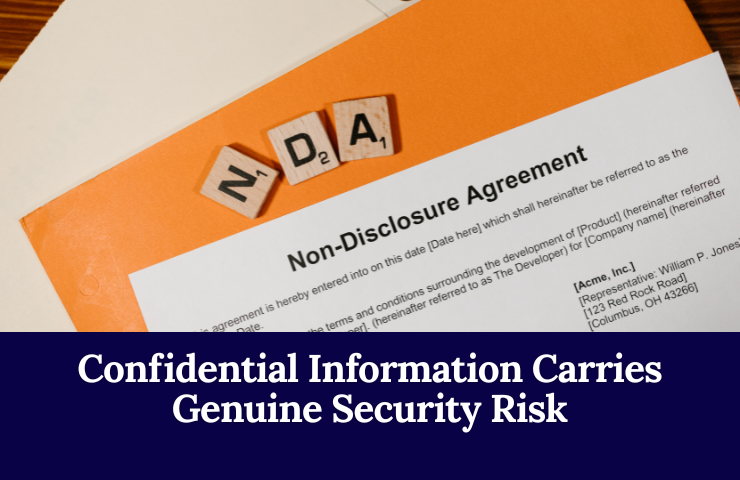
A signed non-disclosure agreement, credential sharing through a dedicated password manager instead of email or text, and access controls limiting what a given hire can see to only what their role requires all reduce this exposure meaningfully. This matters most for regulated or highly confidential work, which is exactly why an executive assistant for law firms gets vetted and onboarded with heavier security emphasis than a general administrative hire.

Day-to-Day Quality Is Harder to Observe Without Physical Presence
Deming’s Plan-Do-Check-Act Cycle Applied to Remote Oversight
Quality management pioneer W. Edwards Deming developed the Plan-Do-Check-Act cycle, a continuous improvement loop built around defining a standard, executing against it, checking the result against that standard, and adjusting the process based on what the check reveals. An in-office manager can informally “check” quality just by observing someone work throughout the day. A remote arrangement removes that ambient visual check entirely, which is a genuine oversight gap, not an imagined one.
Mitigation: KPIs and Documented SOPs Instead of Visual Supervision
Deming’s model still works remotely; it just has to be made explicit instead of ambient. Defined KPIs replace the informal “I can see they’re working” signal, and documented standard operating procedures replace the informal “I can see how they’re doing it” signal. A business that sets these up deliberately typically ends up with better quality visibility than the informal, observation-based version it’s replacing, precisely because the standard has to be written down instead of assumed.

Trust Takes Longer to Build Without Shared Physical Space
Why the Early Weeks Feel Slower
Working relationships are built partly through incidental contact, a hallway comment, a quick read of someone’s expression during a disagreement, none of which a remote arrangement provides by default. The first several weeks of a virtual executive assistant relationship genuinely can feel slower to find its rhythm than an in-house hire sitting a few feet away.
Mitigation: A Structured Shadowing and Onboarding Period
This gap closes with deliberate structure rather than incidental proximity: a defined shadowing period where the new assistant observes the executive’s calendar, communication style, and decision patterns before acting independently, paired with written SOPs that make expectations explicit instead of something the assistant has to infer over time. Businesses that skip this structure feel the slower start most acutely. Businesses that build it in typically reach full working trust on a comparable timeline to an in-house hire, just through a different mechanism.
A Single Assistant Can Become a Single Point of Dependency
The Risk of Undocumented Institutional Knowledge
If an executive assistant is the only person who knows how a particular process works, remembers a particular client’s preferences, or holds the login details to a particular tool, their departure creates a real gap, and that risk exists whether the assistant works in the next room or on another continent. Remote arrangements don’t create this risk from scratch, but they can make it feel more acute, since there’s no other team member nearby who’s absorbed the same context by osmosis.
Mitigation: SOPs, Documentation, and a Replacement Guarantee
The direct fix is the same documentation that solves the oversight problem above: written SOPs mean institutional knowledge lives in a document, not only in one person’s head. On top of that, a structural safety net matters. Exec Assistants backs its placements with a retention rate exceeding 93% and a replacement guarantee in the early months of a hire, converting an open-ended dependency risk into a bounded one rather than leaving a business to absorb the full cost of a bad fit alone.
Weighing the Disadvantages Against the Alternative
None of these six disadvantages is unique to virtual hiring in the way they might first appear. An in-house executive assistant can also disengage, can also become an undocumented single point of failure, and can also take weeks to build real working trust. What’s different about the virtual model is that the disadvantages are more visible and more predictable, which is actually an advantage in disguise: a known, named risk with a documented mitigation is easier to manage than an unnamed one that shows up as a surprise six months into an in-house hire.
The honest case for a virtual executive assistant was never that the model has no downsides. It’s that the downsides are well understood, and every one of them has a specific, workable fix rather than requiring you to hope for the best simply. If your business handles work sensitive enough that the security and confidentiality questions above matter more than usual, that’s worth discussing directly. Book a discovery call and ask about how onboarding, documentation, and the replacement guarantee are actually structured, not just whether they exist on paper.